
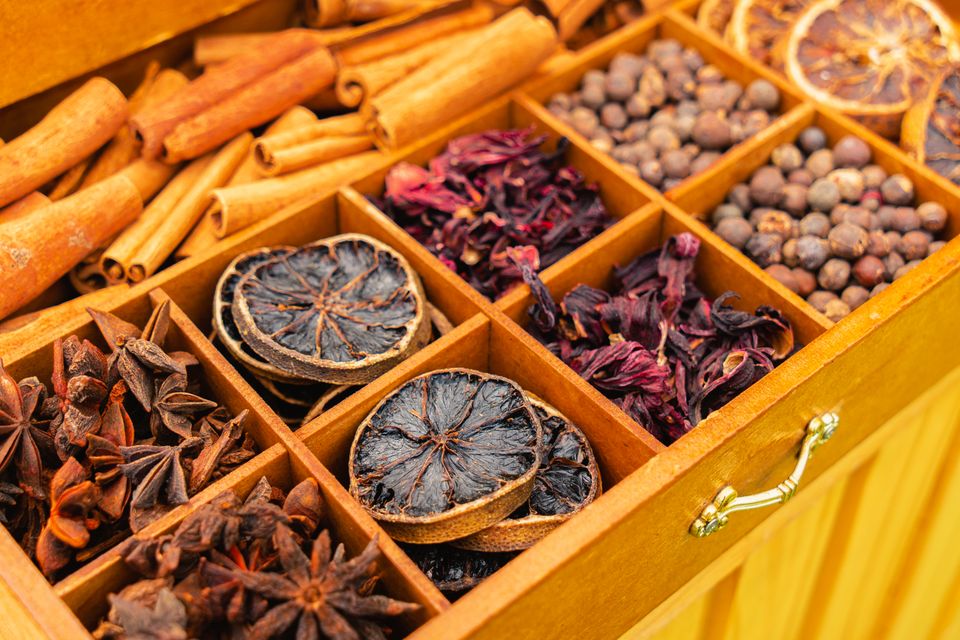
| Liqueurs come in three basic categories .. Strong : 33-45% abv, with 31-55% sugar, Dessert : 25-30% abv, with 32-50% sugar, or Creme : 20-23% abv, with 50-60% sugar. They can be either simply macerated with the flavour, or some are redistilled afterwards too. | They can be made using
|
Citrus Liqueurs
Wal writes ...-
Citrus liqueurs (e.g. limoncello, agrumino) are made by infusing the
peel in overproof spirit, and then adding water and sugar. It
recommended to be kept in the fridge, although it seems O.K. on
spirit store shelves.
You might have gathered I have plenty of lemon and oranges in the
garden!
- Zest of 6 thick-skinned lemons (Lisbon, Citron). Do not use the white pith as it makes the liqueur bitter.
- 1 litre rectified alcohol 50%abv
- 0.5 litre distilled water
- 500g sugar
- Zest of 4 oranges, 2 lemons and 1 lime (or half a citron)
- 1 small mandarin, quartered
- 1 litre rectified alcohol 50%abv
- 0.5 litre distilled water
- 500g sugar
- 10g orange peel (avoid the white pith)
- 2g cinnamon
- 2.5g angelica root
- 2g aniseed
- 1g cloves
- 1g gentian root (bitter root)
- 1g calamus root (sweet flag)
- 650ml 40% alcohol
- 1/2 cup of red wine
- 1litre of orange distillate (1/3 of which is a bitter orange distillate)
- 1.5 litres water
- 1.4 kg white sugar
- 350ml proof spirit (for blending)
- 2 lbs (2 kg) of over-ripe orange pulp (without peel and pith)
- 2 1/4 lbs sugar (1 kg)
- 1 tsp nutrient
- yeast
- water to make 1 gal (4 L)
- 3 large oranges
- 3 cups of vodka
- 1 1/3 cups of fine white sugar
- Pare the rind (no white pith)
- Put peel in a large 4 cup screw-top jar and add 2 cups of vodka, close and steep for a week until the spirit has absorbed the flavor
- Remove peel and add remaining vodka and sugar.
- 225g (1/2lb) dried bitter orange peel (Seville orange)
- 1pinch cardamon
- 1pinch caraway
- 1pinch coriander seeds
- 500ml (2cups) alcohol
- 4tbsp caramel coloring (burnt sugar)
- 1 orange
- 44 coffee beans
- 44 sugar cubes
- 1 litre alcohol
Traditionally Limoncello and Agrumino were made by Italian Amalfi families using handed down recipes originally for private consumption. Here are two recipes.
Limoncello (aka limoncino, limonce):
Agrumino:
Campari
Came across a recipe on an Italian site that possibly resembles Campari. Originally, Campari was the Milan based firm's house bitters. It was launched commercially in 1893.Curacao or Triple Sec
The Dutch not only made gin using juniper berries but also in the 17th century their firms started using bitter orange (Seville orange) peels from the island Curacao in the West Indies. The peel of bitter oranges (with blossoms and leaves) were macerated in alcohol and redistilled to release their essential oils. This was then blended with neutral spirit or brandy and sugar added.The French emulated this and use the term triple-sec for their orange based liqueurs. Although it means triple-dry, most are very sweet. Cointreau uses bitter and sweet orange peels. Grand Marnier uses only bitter orange peels but this is blended with cognac and sugar and then aged. Many of these triple-secs have their inevitable secret ingredients.The literature says that for curacao/triple sec the orange peels should be infused in high strength alcohol and then redistilled - in a pot still I would imagine. It is then blended with water, neutral spirit or cognac. Grand Marnier is further aged in oak.
I have searched the internet for curacao/triple-sec recipes.
"The Houehold Cyclopedia" (1881) suggests redistilling 60g of fresh peel in a litre of proof alcohol and 400ml water (see orange cordial recipe p.18).
A French site suggests redistilling 165g of peel (doesn't say whether fresh or dry) in a litre of proof alcohol and 250ml of water.
Also here is a scaled down version of their Curacao recipe:
I suppose you could use a pure essential orange oil which is usually used in the proportion of 14 drops (1/2 tsp) per litre of alcohol. The orange oil could be also used to adjust your own orange distillate.
You could introduce more complexity by making an orange wine (or mash) and then distilling with added peels. A recipe for 1 gallon U.S. (4 L) :
If you can get orange juice without preservatives you could use 1/2 juice and 1/2 water for 1kg of sugar instead of whole oranges.
An orange liqueur recipe can also be made by solely macerating the peel in the manner of Limoncello (6 lemons / 3 cups vodka,sugar, added water to dilute to 30%abv).
To make 1 litre (1 qt) Orange Liqueur:
Orange Bitters is a common ingredient in classic cocktails, but can be hard to find. Here is a recipe to make your own:
Mashes do contribute to flavor. One quickly tires of drinking watered down 95.7% neutral spirit, and adding flavors lacks the complexities that mashes give. Even an unoaked single malt spirit tastes great. Dutch gins used malted grain mash that was double distilled. The botanicals were incorporated in the second distillation. A reflux column which produces 80%abv could do this in one hit. I personally prefer flavor complexity over alcohol purity as this requires more artistry (I have nothing against technomania though).
I made a lemon vodka from a mash of 25 lemons (peel & juice), 5kg sugar, 25l water. The lemon flavor came across my reflux still which produces 75%abv. I did an orange vodka using 15 oranges (peel & juice). The flavor came across also.
Looking for a present to give for Xmas? What about this visually impressive citrus drink.
Liqueur 44
Parfait Amour
Food and drink reflect the values held by a society, and as values change so do these lifestyle products. These days we give our drinks direct names like 'sex on the beach', 'slow screw' etc. In the 18th century there were liqueurs that were intended for "stimulating the erotic impulses with artful concoctions of spices and flowers mixed with the alcohol. Parfait Amour liqueur is really the only surviving link to that noble tradition." ('Spirits & Liqueurs Cookbook')Parfait Amour (Perfect Love), is apparently Dutch in origin and is presently made by Dutch and French companies. There was once a red version, but now only the blue version remains. It is flavored with violets, lemons, and a mixture of cloves and other spices. The botanicals are macrated in alcohol and then re-distilled. The blue color is achieved with a vegetable dye. Here is a redacted recipefrom French sites, reduced to 1 litre :
Parfait amour:
Stage 1)
20 g citron peel
10 g lemon peel
1.25 g cloves
1 litre alcohol (85%bv)
250 ml water
Macerate (steep) then redistill
Stage 2)
200 g violet petals
1 litre redistilled alcohol (stage 1, diluted to 40%bv)
500 g sugar (2 cups)
1 cup water
Make sugar syrup from sugar and water. Alow to cool. Macerate petals in alcohol until desired color is achieved. Strain and add syrup. Bottle.
Rose petals for a 'Rosolio' and violets for 'Parfait Amour' were mentioned earlier. The 'Parfait Amour' is colored blue. I looked up my herb book and found that 'Cornflower' flowers (Centaurea cyanus) and the stems and leaves of 'Meadowsweet' (Filipendula ulmaria) will give a natural blue color. I gather then that violets themselves will not, and steeping for 5 minutes is sufficient for flavoring purposes. Meadowsweet roots will also give black, while the tops a green-yellow. Other aromatic flowers mentioned in recipes are jasmine, orange blossom, elderflower, rosemary flowers, and lavender flowers. About 1 and 1/2 cups of flowers for 1 and 1/2 cups alcohol seems to be the norm.
Using Nuts
Wal writes ..-
Looked up 'Spirits & Cocktails' by Dave Broom. In the section 'The
use of Seeds and Nuts',some of the liqueurs from spice seed and nuts
it mentions are:
- 'Kummel' (Holland & Germany) uses caraway seeds.
- 'Anisette' (France), 'Sambucca' (Italy) uses aniseed.
- 'Malibu' uses coconut pulp
- 'Amaretto' (Italy) uses bitter almond oil and crushed apricot pits.
- 'Noisette' (France) uses green hazelnuts
- 'Nocino' (Italy) uses green walnuts.
- 'Madrono' (Spain) uses the essential oil from walnuts with alcohol.
- Almonds are part of the botanicals for Bombay Sapphire Gin which uses redistilling.
- 150g sweet almonds
- 70g bitter almonds
- 1 litre 40%vol alcohol
- 500g sugar
- 200g apricot kernels (they look like almonds)
- 1 litre 40%vol alcohol
- 250g sugar
- 1 kg green walnuts
- 1 litre alcohol
- a handful of rose petals
- 2-3 chopped rose hips
- 2 tsp vanilla essence
- 3 cloves
- 1/2 tsp cinnamon
- sugar syrup (3 cups sugar, 1 cup water)
- 500 g green walnuts
- 500 ml dry anise liqueur (ojen, ouzo, raki)
- 500 ml water
- 2 sticks of cinnamon
- 4 cloves
- 29 green walnuts (traditionally an odd number)
- 1.5 l alcohol
- 750 g sugar
- 10 g cinnamon
- 10 g cloves
- rind of 1 lemon
- 400 ml water
- 50 green hazelnuts
- 400 ml whisky (Irish or light Bourbon)
- 300 ml water
- 1 stick of vanilla
- 1 tbsp light honey
- 350 g (1 and 1/2 cups) sugar
- 4cups (500 g) unshelled hazelnuts (filberts). Shell chop and roast.
- 3 cups alcohol (40%abv)
- 1 and 1/2 cups sugar
- 1 cup water
- 1 stick vanilla
- berries, cocoa, coffee, rhubarb root, orange flowers.
- 200 g roasted (160-180C for 6 minutes - light caramel color)
- 750 ml alcohol (40%bv)
- 1 cup honey (or more to taste)
'Almond Liqueur' (France)
'Apricot Kernel Liqueur' (France)
For ripe walnut liqueurs (by maceration) see: http://www.guntheranderson.com/liqueurs/flavors.htm Scroll to walnuts.It's a good site for other flavors also.
Nocino is a liqueur from fresh unripe walnuts that is made all over Italy. It is known in France (Liqueur de noix), Spain (Licor de nuez) and Eastern Europe. The tannins etc. have a medicinal value. The walnuts (about 20/litre alcohol) are picked in June - recipes mention St John's Day (24 June). Spices (e.g. 1 stick cinnamon, 3 cloves, 1 lemon peel /litre) are added. A sugar syrup (500 g of sugar, dissolved in 200 ml water) is also added. Green hazelnuts can also be used (Liqueur de noisette). I came across a recipe from Naples which is unusual in that it includes rose petals:
Nocino (Napolitano)
Licor de Nuez or Nogado (Spanish Walnut Liqueur):
In Italy the nuts are collected between the night of June 24 & 25 because it is believed that the night is magic, especially the dew - "St John dew". The Nocino iss served cold as a digestive after a meal In the past, after strainin the liqueur, the nuts remaining in the bowl were infused with a white wine to make a special vermouth.
Here is an Italian 'Nocino' for comparison:
Liqueur de noisette (Hazelnut liqueur)
Frangelico is an Italian liqueur with a flavor of hazelnuts, herbs and berries.It appeared on the market in the 1980's in a monk shaped bottle. It claims the originator was the monk Fra.Angelico who lived 300 years ago. It's unusual in that it uses ripe roasted hazelnuts. Green nuts have a medicinal value and it makes more economic sense to use thinned out green hazelnuts, and leave the rest to ripen for food. This could be a modern innovation. Coffee and cocoa show a level of sophistication in the recipe which is unusual for a rural monastery. All I can discover about the ingredients is that toasted hazelnuts are macrated in alcohol and then redistilled. Other ingredients are added - including cocoa, coffee beans, vanilla, berries, rhubarb root and orange flowers. It is finally matured in oak casks. You could try to copy the liqueur using the above recipe as a basis. The berries could possibly be elderberries(?). Roasted carob beans could be a substitute for the cocoa.
Frangelico
Macadamia Liqueur:
-
A version of "FRANGELICO" From Italy - great Hazelnut tasting liqueur.
- 4 and 1/2 C. shelled hazelnuts
- 2 tsp. dried and chopped angelica root
- 1/2 split vanilla bean
- 1 fifth vodka
- 1/2 tsp. almond extract
- 1 and 1/2 C. sugar
- 3/4 C. water
- 1 tablespoon glycerin*
Heat oven to 325ºF. Place hazelnuts on cookie sheet and roast in oven. When toasted, chop coarsely. Add nuts and all ingredients except water, sugar and glycerin to aging container and age for a month. At this point, boil the water and sugar together to make a syrup. Strain the nut mixture and add the cooled syrup to it. Add the glycerin and age for another 2 or so months.
Amaretto
From Uncle Jessie ...-
Amaretto Liqueur :
- 1 cup granulated sugar
- 1 cup brandy
- 0.75 cup water
- 3 drops yellow food coloring
- 2 dried apricot halves
- 6 drops red food coloring
- 1 Tbsp. almond extract
- 2 drops blue food coloring
- 0.5 cup pure grain alcohol and 0.5 tsp. glycerine
- 0.5 cup water
Combine sugar and 3/4 cup water in a small saucepan. Bring to a boil, stirring constantly. Reduce heat and simmer until all sugar is dissolved. Remove from heat and cool.
In an aging container, combine apricot halves, almond extract, grain alcohol with 0.5 cup water, and brandy. Stir in cooled sugar syrup mixture. Cap and let age for 2 days. Remove apricot halves. (Save apricot halves, can be used for cooking). Add food coloring and glycerine. Stir, recap and continue aging for 1 to 2 months.
Re-bottle as desired. Liqueur is ready to serve but will continue to improve with additional aging.
Variation: For a more prominant 'bitter almond' flavor, add 4 apricot nuts, split in half, to basic mixture. Leave in for 2 days to 2 weeks depending upon depth of flavor desired. Remove and discard apricot nuts. Continue as directed.
Note: Apricot 'nuts' come from within the apricot pit. You may split pits yourself or obtain them dried at a health food store
-
'Top Secret Recipes' version of 'Di Saronno Amaretto' by Todd Wilbur.
- 1 cup water
- 1 cup granulated sugar
- 1/2 cup brown sugar
- 2 cups 40%abv vodks
- 2 tbsp almond extract
- 2 tsp vanilla extract
- Combine water and sugars in a saucepan over medium heat.
- Heat until boiling, and all the sugar is dissolved. Remove from heat and let mixture cool for about 10 minutes.
- Add vodka, almond and vanilla extracts. Store in a sealed bottle.
Coconut
Wal writes ...-
Came across a 'Licor de Coco' recipe in a Brazilian site which might
interest those intrigued by 'Malibu' and clones:
- 1 litre white rum
- 1 freshly grated coconut kernel
- 800 g sugar
- 250 mL water
Coconut Liqueur
Cordials
Southern Comfort
Wal writes ...-
Cordials (liqueurs) and punches were popular in the U.S. Originally
bourbon whiskey was quite rough, as demand did not allow for aging,
and therfore invited additional flavoring.
- For 1 litre of bourbon whiskey you could experiment by macerating for 10 days and then straining:
- 1-2g cinnamon
- 3 strips of orange peel
- 1 strip of lemon peel
- 1-3 halved peaches
- 1/2 cup sugar
- caramel coloring
- 1 litre proof alcohol (40%abv).
- 450g honey
- 2-3 handfuls of scented rose petals
- 12 peaches, halved, with pits, and a few pits broken open
- Macerate for at least 2 weeks, then strain.
- 1 and 1/2 cups fresh peaches; peeled & sliced (another site suggests 750 g)
- 2 cinnamon sticks
- 1 and 1/2 cups sugar
- 4 strips lemon peel
- 3 whole cloves
- 2 cups bourbon
- 2 lb (900 g) fresh peaches; stemmed and washed
- 1 cup sugar
- 1 cup water
- 1 tsp lemon zest
- 1 tsp orange zest
- 2 and 1/2 cups bourbon
- 12 medium yellow peaches
- 4 lemon peel strips (no whites)
- 1 cinnamon stick
- 3 cups (750 ml) alcohol (Bourbon)
- 1 cup sugar syrup (1 cup sugar, 1 cup water)
- 4 cups fresh peaches peeled and sliced
- 1 and 1/2 cups sugar
- 750 ml brandy
- 3/4 lb (350 g) sugar
- 2 l dark rum
- 2 l water
- 2 cups peach brandy
- 1 l brandy
- 1 l fresh lemon juice
Southern Comfort was first made in New Orleans by the bartender named H.W. Huron in 1870. The taste is the result of bourbon whiskey, fruit and spice. The whiskey provides the tastes of caramel and vanilla. The fruit is peach with orange and some lemon. The spice seems to be just cinnamon. It comes in 38%abv and 50%abv strengths. Could one emulate the bartender Huron?
I came across Peach and Rose Petal Liqueur, from an 1830 cookbook:
Peach Liqueur
Peach Liqueur
'Southern Comfort' originally was called 'Cuffs and Buttons' by the bartender H.R. Heron in the late 1800's. The 'Fish House Punch' recipe from the mid 1800's shows that peach flavored drinks were known and could have been the source of his inspiration.
I don't know if the posted Peach Liqueur recipes are traditional in line with the 'Cuffs & Buttons', or are just imitating 'Southern Comfort'. You need to experiment. Here is another for comparison:
Peach Liqueur
Peach Brandy
Fish House Punch (Original)
Coffee
COFFEE LIQUEUR
INGREDIENTS- 100 grams of very fine grounded coffee.
- 2 mL of vanilla essence
- 0.75 Litres of sprits, 45%
- 0.5 Litres of water.
- 0.75 kg of sugar
- 2 tablespoons of milk
Combine the coffee, vanilla essence and sprits into a large jar, seal tight a store for a week, shaking daily. After a week filter the liquid (without the sedement). Into the bottle with the remaining sedement, add half of the water (250 mL), when settled, filter the liquid (without the sedement). Add the other half of the water, and filter. Discard the sedement. Dissolve the sugar in the coffee extract and add the milk. Shake well and store in a cool dark place for one week, until settled. Filter the liquid and store. Liqueur gains taste after standing of a long time, best after 3-6 months.
Wal writes ...
-
After a tiring session of distilling ,it's good to take a coffee
break. Adding spirits like rum, cognac, calvados and liqueurs like
Sambucca to coffee is common in Europe, so it's no wonder there are
coffee based liqueurs - two of the most well known are 'Tia Maria'
and 'Kahlua'.
- 2 cups ground coffee beans (medium roast pure arabica beans - Blue Mountain style would be appropriate)
- 3 cups boiling water
- 1 1/2 cups granulated sugar
- 1/2 cup light brown sugar
- 3 cups pure alcohol (40%abv)
- 1 vanilla bean or 1 tsp. vanilla extract
- 1 tsp. glycerin
'Tia Maria' comes with a colorful story (yes another one). "The story of the recipe dates back to the 17th centurry, when Jamaica was caught up in the colonial wars that raged across the Caribbean. When one estate was attacked the owners had to flee, and the young daughter and her maidservant Maria got separated from the rest of the family. Maria managed to collect her mistress's possesions, along with a box containing (wait for it) the secret recipe for the family's coffee liqueur. Years later the girl gave the recipe to her daughter, who named the liqueur Tia Maria (Aunty Mary) after the servant." ('Spirits & Cocktails' Dave Broom,1998). What I can gather is that it is a coffee, chocolate and spiced rum liqueur. In the West Indies, spices such as cinnamon, cloves, vanilla, nutmeg, rosemary and pepper are used to flavor rums. A well known brand is 'Capitan Morgan Original Spiced Rum' which contains cinnamon, cloves, vanilla. Cinnamon, nutmeg, vanilla is another combination used in other rums.
'Kahlua' claims to be Mexican, although the original label had a turban clad figure within Moorish arches. It now has a stereotype Mexican in a sombrero, in a siesta posture. It is the second biggest selling liqueur in the world.
There are numerous coffee liqueur recipes. I tried to rationalize them to the one below, so that one can experiment for themselves:
Kahlua style Coffee Liqueur (using real coffee)
For Tia Maria use a dark spiced rum or make your own using cinnamon, cloves, vanilla. For the chocolate, we could add 1 tbsp. cocoa powder, as dark cooking chocolate might contain too much cocoa butter.
Dates & Raisins
USQUEBATH
(pronounced Oosùkeùbah -- Gaelic for "water of life")- 1 qt vodka
- 1/2 cp sugar
- 2 oz licorice
- 4 oz raisins
- 4 oz dates
- 4 oz figs
- 2 oz anise seed
- 1/4 oz nutmeg (broken)
- 1/4 oz cinnamon
- 1/4 oz ginger
- 0.065g musk (use musk essence)
- 0.065g ambergris (not available these days)
Wal offers a slightly different alternative ..
- 1 litre brandy
- 100g sun dried raisins
- 7g cinnamon
- 7g cloves
- 7g nutmeg
- 7g cardamon
- saffron 3.5g (gives a yellow color)
- 3 strips of Seville orange (bitter orange) peel
- Macerate for 10 days, strain and add 1/2 cup raw sugar
- 1 litre proof spirit
- 250ml water
- 2g cinnamon
- 2g ginger
- 2g coriander
- 1g mace
- 1g cloves
- 1g cubeb
- Macerate and redistill.
- Steep in 250ml water for 12 hours the following:
- 3.5g English saffron
- 45g sun dried raisins
- 35g dates
- 20g liquorice
- Strain and add to the above.
-
Dates with a 70% sugar content are an ideal sugar source for the
distiller. Early whisky recipes also used raisins, figs and dates for
flavor and sweetness. 'Thibarine' is a Tunisian date liqueur and
'Tamara' is an Israeli date liqueur (tamar means date palm in
Hebrew). Here is a basic recipe:
- 500g (1lb) chopped pitted dates
- 500ml (2cups) neutral alcohol 40%bv
- 125ml (1/2 cup) water (to dilute to liqueur strength)
- 125g (1/2 cup) sugar (or honey)
- 1 kg dates
- 1 litre alcohol 40%bv
- 1 tsp cumin seeds
- 1 tsp crushed cardamon seeds
- sugar or honey to taste
Date Liqueur
Daniel Rogov, a writer on food and drink provided the ingredients (dates, crushed cumin & cardamon seeds) and the method (steep dates, some cooked, others raw together with cumin & crushed cardamon seeds in alcohol). I have modified the basic 'Date Liqueur' to resemble 'Thibarine'.
Homemade Thibarine (Tunisian Date Liqueur)
There are many varieties of dates. Some are hard and lend themselves to boiling, while the soft varieties can be used raw. I have found that that the above quantity of dates gave enough sweetness without adding sugar.
Using Spices
Goldwasser
Wal writes ...-
Goldwasser was first produced in 1598 in the Prussian port of Danzig (now
Polish Gdansk). It contains infusions of botanicals with flakes of real gold, which
makes it a unique liqueur.
"Goldwasser or Danziger Goldwasser to give it its archetypal name, recalls the great
Catalan physician Arnaldo de Villanova who, in the 13 th century, is reputed to have cured the
Pope of a dangerous illness by giving him an elixir containing specks of gold."
(Spirits & Liqueurs Cookbook)
There was for a time a silver version - Silberwasser. Liqueur d'Or or Eau d'Or was
a now extinct French version. A Danziger Goldwasser is made in Germany, while the
Polish Distillery Polmos makes a Goldwasser (Zlota Woda) not in Gdansk, but in
Poznan, from esential oils according to the label. There is a Swiss version containing
gold flakes but which has a strong cinnamon character, which does not resemble the
Polish or German versions. For those who want to make an impression as a 'Goldfinger'
or want to cure a dangerous illness, gold flakes can still be obtained. Here are the
Polish and French versions. Note that the Polish version relies only on maceration,
as a double home distillation is illegal.
- 35 ml 'Goldwasser Essence'
- 450 g sugar
- 25 ml cognac
- 430 ml alcohol 95%bv
- 60 g water
- 'Goldwasser Essence'
- 5 g star anise
- 2 g cinnamon
- 3 g nutmeg
- 1 g cloves
- 1 g cardamon
- 4 g coriander
- 4 g melissa
- 4 g peppermint
- 1 g rosemary
- 6 g lemon peel
- 8 g orange peel
- 500 ml alcohol 55%bv
- Dilute 300 ml 95%bv alcohol with 210 ml water, making 500 ml alcohol 55%bv. Place botanicals in a jar, add alcohol and macerate for 2-3 weeeks. Strain and keep in a warm place. Add sugar dissolved in the water, to Essence. Add cognac and alcohol 95%bv. Add water to make 1 litre and leave for 4-6 months. Filter and add gold flakes.
- 60 g cinnamon (cassia)
- 60 g aniseed
- 50 g juniper
- 30 g nutmeg
- 30 g orris root
- 30 g rosemary flowers
- 20 g cardamon
- 20 g cloves
- peel from 10 lemons
- peel from 5 oranges
- 12 litres (3 U.S. gals) alcohol 85%bv
- 3 L water
- Macerate.
- Double distill.
- Color lightly yellow with saffron.
- Add gold flakes.
- Perfume with orange blossom water.
Goldwasser - zlota woda
-
Ingredients for 1 litre of liqueur.
Eau d'Or
Spiced Rum
Wal writes ...-
Came across a Spiced Rum recipe that apparently is better than Captain
Morgan:
- rum 750 ml
- cinnamon 3 sticks
- cloves 5
- peppercorns 5
- nutmeg 1/2 crushed
- ginger fresh, size of tip of little finger
- vanilla bean 12-25 mm
1) Cinnamon Spiced Rum
2) "Nannie" - rosemary spiced rum
Captain Morgan Original Spiced Rum apparently contains cinnamon, cloves and vanilla. Another combination found in other spiced rums is cinnamon, nutmeg, vanilla. In the West Indies the common flavoring spice added to rum is cinnamon or rosemary.
Here is a recipe for a Spiced Rum (Ron con Especias) from http://www.recipehound.com/Recipes/2156.html
3) Spiced Rum
- rum 1 litre
- cinnamon 3 sticks
- cloves 6
- nutmeg 1 whole crushed
- pimento 4
- star anise 3
- aniseed pinch
- vanilla bean 1
Cinnamon and Nutmeg
Wal writes ..-
The Italians have a 'Rosolio de cannella', the French have a 'Liqueur
de cannelle', a 'Firewater Cinnamon Schnapps' at 50%abv (made by the
Dutch De Kuyper firm I think) is available in the U.S. Schnapps are
usually less sweet than most liqueurs.
Here is a recipe for the French version that I got from a site that
contains a vast number of recipes in French:
http://www.france-des-terroirs.com/
- 10 sticks of cinnamon
- 500 ml rum
- 500 g sugar
- 500 ml water
- Macerate cinnamon in the rum for 2 months
- Strain and add sugar syrup (500g suar dissolved in 500 ml water)
- Leave for 3 months before drinking.
Cinnamon Liqueur
Nutmeg (Myristica fragrans) is a mild hallucinogenic drug, somewhat like marijuana. Eating as few as two nutmegs can cause death. ('The Herb Book', John Lust, 1974) "Contraindications: May cause temporary constipation and difficulty in urination. Nutmeg oils increase fat deposits on liver. Safrole is carcinogenic and toxic to liver. Beneficial as spice or in small amounts, not recommended as hallucinogen." Strounge, this explains why it "gets you sleep on cold winters night."
Stolen from Basic Brewing: Introduction to Meads, Wines, Beers, Cordials, and Exotics.
CINNAMON CORDIAL
- 12 stick cinnamon
- 1 qt vodka
- 1 and 1/3 cp sugar 2 tbsp honey
Wal also offers ...
- a spice and honey flavored vodka called 'Krupnik'
that I got from a Polish cookbook:
- 300g honey (1 cup)
- 750ml vodka (40%abv)
- 1/4 piece vanilla bean
- 1/4 nutmeg
- 10g cinnamon
- 2 cloves
- 1 strip of lemon peel
Krupnik Litewski
Macerate and strain after 10 days
Honey Vodka
Preparing the essence : Combine all ingredients and dissolve in the sprits as much as possible
- 3 grams of Cinnamon.
- 1 gram of cloves.
- 3 grams of ginger.
- 2 grams of nutmeg
- 4 grams of vanilla
- 150 mL of sprits, 60%.
- 0.5 kg of honey
- 0.5 Litres of sprits, 95%
- 5-10 mL of essence (see above)
- 4 mL of lemon juice.
- 200 mL of water, approx.
In an enamel pot pour the water (200 mL) and bring to boil. Add honey, the pot should be at least double the height of the water as to prevent the honey from boiling over. For prefect results, bring the honey to boil and boil for about a dozen minutes, until all the froth is gone, then turn off the heat. After the honey has slightly cooled, add lemon juice and essence. Then slowly pour the sprits into the honey, constantly stirring. Bottle the drink into large bottles and leave for approx 3-6 months, until nice and transparent. As the solution can not be easily filtered, the clear liquid should be syphoned into another bottle, and only the remaining drink filtered. The amount of essence added depends on the samplers personal taste, for those who prefer a strong root flavour upto 10 mL of essence may be added.
Emulsions with Eggs or Cream
Whiskey liqueurs - Bailey's Irish Cream
Wal writes ...-
This is the world's top-selling liqueur. Gilbey's in Ireland didn't
know what to do with its surplus of spirit, but luckily someone came
up with the idea of a bottled Irish coffee. It was launched in 1975
and was an immediate success because it contains everything doctors
say is good for you - alcohol, rich cream, caffeine. It is 17%abv. If
we assume that it is basically an Irish coffee with different
proportions, here is a possible recipe to try out on your
wife/partner/girlfriend:
- 500 ml. (2 cups) rich (double) cream (the light has thickeners)
- 500 ml. (2 cups) Irish style whiskey (40%av)
- 3-4 tsp. instant coffee (real coffee is acidic, which might curdle the cream)
- 1 cup of sugar
- Blend and refrigerate.
Bailey's Irish Cream
-
Healey's Irish Cream
- 3 eggs
- 1/2 tsp coconut essence
- 1 and 1/2 tbsp chocolate syrup
- 1 can eagle brand condensed milk
- 11oz 15% cream
- 1 cup of white rum or whatever you like
-
Here is a recipe I have used for a long long time with good reviews:
- 1 cup Light cream (or half&half)
- 14 oz can Eagle Brand Sweetened Condensed milk
- 1 and 2/3 cup Irish Whiskey (or scotch)(I don't know about bourbon)
- 1 tsp Instant coffee
- 2 Tbsp Hershey's chocolate syrup
- 1 tsp Vanilla
- 1 tsp Almond extract
Bailey's Original Irish Cream
Advocaat
Wal writes ...- Alcohol is suitable to emulsify and preserve creamy ingredients.
Advocaat, a Dutch speciality, is an alcoholic egg yolk emulsion. In
Germany it is known as 'eierlikor' or 'eiercognac'. Dave Broom in
'Spirits & cocktails' says this about its origins:
"Its original incarnation was as a planter's drink in Holland's
Brazilian enclaves, where the fruit of the abacate tree would be
fermented and drunk. When the planters returned home they found that
abacate trees were distinctly thin on the ground and, warping the
original name to advocaat, decided to use eggs instead."
- 10 egg yolks
- 2 pkts. vanilla sugar (or 2 tsp. extract, or 1 stick of vanilla)
- 250 g. (1 cup) sugar
- 500 ml. (2 cups) brandy or gin 40%abv
- 250 ml. (1 cup) water
- Beat egg yolks and sugar, add diluted gin and vanilla. It would be advisable to add lecithin as an emulsifier, otherwise you need to keep shaking the bottle all the time. About 5 grams (1 tsp.) should be sufficient.
- 3 large ripe avocadoes (yellow inside)
- juice of 1 lime (or lemon)
- 250 g. sugar (1 cup)
- 500 ml. (2 cups) white rum
- 250 ml. (1 cup) water
- 5 g. (1 tsp. lecithin)
- Blend avocado pulp, sugar and lime juice and lecithin. Blend in diluted white rum. It should be absolutely smooth and creamy. Vanilla is not normally added to 'creme de abacate'.
'Abacate' is portugese for avocado, in French it's 'avocat'.
I could not find any reference to fermenting avocadoes, and it does not seem to me to be a suitable fruit (being high in oil) to ferment. In Brazil, avocadoes are popular as a dessert though, and there is a recipe for 'creme de abacate' (avocado cream). The main product of the former Dutch colony of Suriname was sugar cane, and I can imagine that white rum could have been added to an avocado cream to make a local specialty. Perhaps our Dutch distillers could help here. In the Philippines you see avocado ice cream and avocado milkshake, so the idea is not that weird.
Although there are recipes for Advocaat that have milk, condensed milk or cream, the original only uses egg yolks. 'Warninks' is a popular Dutch brand. For those who do not have a cholesterol problem here is a recipe from a Dutch site, (http://www.uoguelph.ca/~antoon/recipes/adh.htm):
Advocaat
For those who have a cholesterol problem or do not like eggs, we could attempt to resurrect the original avocado version. Avocadoes oxidise (turn brown) easily, so acid needs to be added. Ascorbic acid, is a good anti-oxidant, and could be added additionally. Try this as an alcoholic version of 'creme de abacate':
Creme d'avocat (Avocado cream liqueur)
Atholl Brose
Mc Wal writes ...- From the files of http://www.florilegium.org, beverages-msg. - a forerunner
of a Highland Cream:
- 6 oz/175 g medium oatmeal (1 and 1/2 cups)
- 4 tbsp heather honey
- 1 and 1/2 pt/750 ml whisky
- 3/4 pt/450 ml water (2 cups)
- 1 qt (1 L) steel-cut oatmeal, uncooked
- 1 cup heather honey
- 750 ml single malt whisky
- Milk or cream to taste
- 2-3 cups rolled oats
- 2-3 cups water
- 1-1 and 1/2 cups additional water
- 4 cups whisky
- 1 cup honey
- 1 cup cream
It was very common to mix whisky with honey and oatmeal in the past. The resulting brose is even now often served at festive celebrations, drunk as a liqueur or mixed with stiffly whipped cream and served with shortbread as a dessert. Some traditional recipes leave in the whole oatmeal while the one below, reputed to have come from a Duke of Atholl, uses only the strained liquid from steeping the oatmeal in water.
Atholl Brose 1
Atholl Brose 2
Atholl Brose 3
It looks nutritious, and if you are in a hurry in the mornings, you could have it for breakfast!