
Vodka
Peter reports :-
a great site I found : http://www.polishvodkas.com/
. It has a massive links page too.
Heres some interesting quotes from it
"the best vodka is always the one that tastes best to us"- AMEN!
"sulphite waste liquor, a waste product of cellulose production. This liquid is fermented to produce alcohol and then the spirit is distilled off. It is heavily contaminated with methanol and sulphur dioxide. Its trade name is sulphite spirit. In Poland it is used only for technical (industrial and household) purposes, but in Scandinavian countries, where there is more of it compared to crop- sourced spirit, effective methods have been developed to rectify it, and there it is used to make popular vodkas."
"The water used to dilute the rectified spirit must be not only completely colourless and without any foreign taste or odour, but also demineralized. Otherwise it will cloud the liquor and precipitate, and the precipitates are difficult to remove. Water is demineralized through the removal of iron and manganese compounds by aeration and filtering and also through softening (removal of lime and magnesium) in ion exchangers. A still more effective method is the now-widespread method of reverse osmosis. In the past, water was demineralized by distillation; today this has been abandoned because of its energy-intensiveness and the fact that it leaves a not-too- pleasant odour and a flat aftertaste. Demineralized water must be used for production within 24 hours after the process is completed. Some the important elements of vodka production are these: The way the spirit is mixed with the water - mechanically or using air (the latter seems to give better results)"
-so aeration is used in commercial production. time to get a s/s airstone.
"Other ways are to treat the vodka with pure oxidising chemicals, salts of soda or potassium (usually carbonates or bicarbonates) or organic acids. A little sugar is sometimes added. Vodka is also subjected to the action of heat, sunlight, electricity, catalyses, ultrasound, silver compounds, etc. Achieving clarity and "sheen" through the use of plate-and-frame filters with micropore or microscreen inserts"
"The quality of vodka is judged by professional tasters who have been examined for their taste and smell sensitivity according to official Polish standards. Rectified spirit is tasted at about a 33% dilution at 25-30°C. Vodka is tasted at its nominal strength at 25°C. It is particularly important that the tested samples be at a perfectly uniform temperature."
-it may be an idea to dilute the vodka that we taste during a run to detect the heads and tails sooner.
"Today we know that vodka does not have to be a liquid: it can be gelled and consumed that way (Polish patent no. 170637)or, taking it a step further, manufactured in powder form (British patent no. 1,138,124). It turns out that the sugar contained in milk, lactose, has the ability to absorb ethanol, making a powder to which powdered flavorings can be added. Mixed with water it becomes a flavored drink."
-powdered vodka???
"When it comes to serving unflavoured vodka straight, it is better, in my opinion, to keep a bit of the natural grain aroma that draws the connoisseur. I also think that for producing neutral rectified spirit it is better to begin with potato spirit because its aromatic constituents are less, are not so desirable, and are easier to eliminate."
"Hurried distillation can lead to several problems. For example, the wash can be introduced into the still when it has not been fully fermented and still contains some sugars. These burn inside the apparatus and release diacetyl, which is never completely removed by rectification and give the final vodka a smell of toffee or caramel. Unspent yeasts also burn in distillation and release what are known as Bs, which smell slightly meaty and unpleasant. While hurried rectification usually ends with the apparatus being unable to extract some impurities such as amyl alcohol, which smells of nail-enamel remover, or DMTs, which smell of boiled cabbage. Too much residual fusel oil - a thick, oily substance that makes the vodka smoother in tiny quantities - makes the vodka heavier and more greasy. There are many vodkas on the market that have one or several of these faults. But don't take my word for it. You can judge the quality of a vodka's production by cutting one measure of vodka at room temperature with two of pure, bottled, still water such as Evian in a wineglass and then nosing it carefully after you have swirled it to release the aromas. Most faults will then become so apparent that they will scream at you"
-
Some excerpts from 'Classic Vodka', N.Faith & I.Wisniewski, 1997.
Throughout its history - and never more so than today - vodka has been the object of an underlying tension between those looking for purity at any cost and those looking for positive qualities.
In the late 18th century it was discovered that charcoal not only removed many impurities from the spirit, but also added its own warmth and smokiness.
Ultimately the differences between vodkas arise from 3 factors: first, and crucially, the raw material used; second the water; and third, the methods and techniques used for filtration. but the ability of modern distillation techniques to remove impurities.....means that character is often now provided after distillation by adding a comparatively less rectified spirit.
Potaoes usually give a sweeter aroma and flavour than grain, although rye also yields a natural, subtle sweetness.
The higher level of pectin in potatoes, which is responsible for producing methanol means that they contain about 10 times more methanol than grain....... .....100kg of potatoes yield about 9 litres of spirit, while the same amount of grain produces around 25-30 litres.
.... - quite a few of those made in Russia or Western Europe are the result of low-strength distillation which has left traces (of even greater proportions) of impurities.
Before Peter (1672-1725) came to the throne in the late 17th century most Russians used honey to dilute and improve the flavour of their vodkas. By the late 19th century it had become less necessary to disguise the original taste of vodka, but improvements in distillation techniques were still needed to refine an inevitably disagreeable spirit. Distillers used coagulants like bread, egg whites - also used in refining expensive wines - ashes, potash and soda, to remove the grosser impurities, until the 18th century that charcoal provided an incomparable method of filtration...... By then the Russians were beginning to use not only anise but also herbs and spices,....
Flavoured Vodka
Volodia writes ..-
Samogon means self(samo) distilled(gon)i.e. moonshine, similarly
samovar means a self-brewing tea urn. Vodka (in polish wodka, in
ukrainian horilka) is the generic name for the distilled spirit. Its
the diminutive contraction of its archaic name "zhizhnennia voda" (aqua
vita). Specialty vodkas are flavored by later infusing the pure
distillate with various herbs, berries, fruits. Villagers did not
follow written recipes they just "added to taste". Russian, Ukrainian
& Polish cookbooks (some in English) usually have recipes at the back
under beverages. Polish, Ukrainian & Russian vodkas share a similar
heritage (ignore national pride).
See http://www.vodkaphiles.com/flavor.cfm for recipes for flavored vodkas from "A Taste of Russia" published by Russian Life Books and http://www.polishvodkas.com/
In Siberia they make samogon using flour and kalina berries (guelder rose, high-bush cranberries). A recipe for the wash could be 1.5kg flour, 0.5kg berries to 5l boiling water to gelatinise the starch in the flour.This relies on amylase enzymes present in the flour, or you could add amylase (at 65C) to get a quicker conversion. The berries provide the yeast with nutrients & provide flavor to the vodka. Suitable alternatives would be rose-hips or cranberries.
Ukrainians add 2 hot chilli-peppers to a litre of vodka for their "Horilka z pertsem" ( Chilli-pepper vodka).
Russians add pepper corns. It was once mistakenly believed that they rectified rough samogon.
My Lemon Vodka - Instead of infusion, I made a sugar wash(6kg/25l water) & added juice & peel of 25 lemons. ( 1 lemon = 3g citric acid) Distilled it once in a 2 stage equivalent reflux still & got a clear, delicate flavored vodka. Will try it with orages next.
In the Caucus Mountains they make a vodka from elderberry mash. Try it with 2-4kg of berries, & 1kg sugar/5litres of water.
300g of whole dried rosehips or 150g dried shells added to 5 litres of a sugar wash adds nutrients but not an overpowering flavor.
To Chill Vodka in the East European Manner:
-
You can put it in the coldest part of the refrigerator or encase it in
its own mantle of ice -
First boil some water, so that the resulting ice is transparent. Allow
the water to cool and then pour about 25mm (1-inch) of water into a
tall thin container - an empty 1-litre (1 quart) milk container is
excellent - and freeze until firm. Place the vodka bottle firmly in
the centre of the container, surround with water and freeze until
solid. When you are ready to serve it. simply dip the container in hot
water for a few seconds and the bottle will slip out of its
ice-mantle easily.
-
Rectification recipes for 3l of samogon vodka:
- "Cognac" (1). 1tbsp sugar, 1tbsp tea, 3 bay leaves, 5 black pepper corns, 3-5 cloves, 3mm piece vanilla bean, some lemon or orange peel.
- "Cognac" (2). 3 bay leaves, 6 all-spice seeds, 6 black pepper corns, 3tbsp sugar, 1/4 tsp vanilla essence, 1tbsp cinnamon, 2tbsp tea, 6 cloves.
- "Cognac" (3). 3 tsp sugar, 3tsp instant coffee, 3 bay leaves, 5 cloves, 8 black pepper corns.
- Starka (for 500ml vodka). 5 drops of ammonium smelling salts.
- Infusions. Wormwood; Currant; Plum; Morello cherries.
- Liquers recipes are given for Strawberry, Raspberry, Milk, Grape, Coffee, Rose petal, Cucumber (fresh and fermented).
- Colored vodka recipes using violets, mint, bilberry, sunflower seeds, saffron.
- 1litre vodka
- 35g fresh mint
- 35g fresh aniseed
- 35g crushed Seville orange pips (bitter orange seeds)
- Macerate for 2 weeks, then decant.
Came across an 18th century vodka recipe from a Russian site. Erofei was Graf (count) Alexei Orlov's barber (tsirul'nik). He had a good knowledge of herbal medicine and came up with a cure for his noble client's ailment after mainstream doctors could not.
Recipe for Vodka Erofeich:
A good Russian home distilling (samogon) site: http://www.stopka.ru/drink/samogon/samogon00.shtml. A reflux column (deflegmator) is mentioned but gives not much detail. Pot stills are king in Russia apparently.
-
Peppered Vodka. Over here, we make our peppered vodka the straight
forward way - use peppers as hot or as cool,(I
grow mine, jalapeno)as you can stand it, slice
in half, and add a few to each bottle. After it
turns a wee bit green (jalapeno) it's ready.
If for some reason it's too hot, add a bit of sugar &
lemon. Excellent for cesare's. I usually make mine
BEFORE diluting, as it is hot and the extra h2o
cools nicely.
Flavored vodkas are large here too. There is a drink I call lemon drop. remove the rind from 3 large lemons, throw it in a gallon of vodka, wait 1 week, strain. Then decant into smaller bottles and freeze. Of course it won't actually freeze, but it gets thicker than normal. Then cut up some lemon wedges, sprinkle with sugar, and have a shot of the vodka, then the lemon. tastes like lemon drop candy, only with a huge punch.
Another good one is red currant. 1 1/2 cups r.currants, from the bulk store, to 1 gallon of vodka, store for a month or so, til nice and red colored, strain, serve with fresh orange juice.
-
Vodka wort distilled and cut to 20%. Get yourself some
Strawberry/Kiwi concentrate and follow the mixing instructions. Up here, we
mix 1 part concentrate with 3 parts water. Substitute the water for your
diluted mix... Now add 1tsp of citric acid per 250 ml of juice. This will
become VERY sour. I like sour. Sour good, fire bad. Play with it and find
what you like. Citric acid can be purchased at the chemist's or a spice
shop. Raspberry Juice is KILLER with this recipe.
Wal writes
- A Russian site suggests the
following 'Cognac' flavoring for 1 litre of vodka. Steep for 10 days
- 1 bay leaf
- 3 pinches black pepper
- 1 clove
- touch of vanilla
- small piece of orange or lemon peel
- 1 tsp sugar
- 1 litre grape juice
- 1 litre alcohol (45%bv)
Strounge adds ...
-
I've done some playing around using fresh bay leaves, I found one sprig consisting of four big
leaves and four small leaves, lightly bashed and left in 500ml of my 55% potato/oat vodka
gave a nice flavour. It makes it a little harsh but sweetening it with maple syrup made it more
drinkable as well as giving it a nice colour and a very strange flavour.
Grape Ratafia
In the Charente (Pineau des Charentes), Burgundy (ratafia de Bourgogne) and Champagne (ratafia de Champagne) regions, an aperitive style is made by adding young (unaged) brandy to the grape must after it has been crushed. The action prevents fermentation and retains all the natural grape sugar. Here is a translation of 'Ratafia de raisin' from a French site:
Fruit
Bill suggests ...
-
Now here's an old trick that will make yer taste buds come alive.
Take ya some peaches, or cherries, or muskeedine, or grapes, or
whatever fruit you wish and throw in yer finished product. Let stand
fer 6 months to a year. Just make sure the fruit is ripe when ya put
in and ya may want to pit the bigger fruit (yer choice).
-
Just sampled some ginger liquor that has been macerating for about a month, smooth
with a little after bite. Just added about an inch or two of finely chopped gingerroot
to a 26oz bottle, a cup of sugar, topped with base alcohol at40% and let sit for awhile
(1or 2 months) strain and enjoy.
Also tried a coffee. Used the equivalent of 20 cups of coffee, finely ground beans directly into a 1 ltr bottle added a cup or two of sugar, topped up with 40% alcohol cap and let sit for a week, strained through a coffee filter (obviously) then added a couple of oz. of this to a mug of hot milk, A rather pleasant way to start your Saturday. Dont know how long this will last before it gets bitter, it probably wont be around long enough to worry about.
Had a few people asking about making liquors. Basically its common sense. Liquors are made from any fruit, herbs, seeds, nuts or vegetables, There are no absolute rules to this. Two ways of doing it macerate, (soak the stuff in alcohol, I use 40% but thats up to your taste) or distill in a pot still after fermenting it. I tried the latter, but found that the stuff tends to stick on the bottom and does nothing for the flavor.
I just fill up a mason jar (large quart size) with what ever fruit i am using, add a cup or two of sugar, top up with alcohol, make sure the fruit is covered, put it in a cool dark place for a couple of months, check once in awhile and shake it to dissolve the sugar. When its done strain off the fruit ( keep this for adding to ice cream for a different dessert) filter the liquid through a coffee filter, add 5 ml. of glycerine to smooth it a lttle. (optional) Simple as that! dont be afraid to experiment, thers no hard and fast rules here, just have fun trying different combinations you really cant go too far wrong.
Absinthe
There are three basic styles for making absinthe.1. Add wormwood to a wine and distill off. Soak some wormwood in neutral spirit to colour, and add the two together.
2. Soak wormwood in some neutral alcohol
3. Adding oil extract to neutral alcohol.
Of these, (1) is the traditional technique, but (2) is commonly used by "cheaper" manufacturers. Style (3) is usually shunned.
Wal writes ...
-
Pernod is Absinthe without the wormwood for legal reasons. If you want
to know what it tasted once, macerate wormwood (artemisia absinthium)
in the bottle.
- Macerate 25g wormwood (Artemisia absinthium), 50g anise, and 50g fennel (all finely divided) in 950ml 85%abv in a 2l flask. (Note: no heat was specified for extraction).
- Add 450ml distilled water.
- Do a pot still distillation, collecting 950ml of distillate.
- Separate 400ml of the distillate, add 10g Roman wormwood (Artemisia pontica), 10g hyssop, 5g lemon balm, and macerate at 60C.
- Filter and reunite with the remaining 550ml and dilute to 74%abv to produce 1litre of Absinthe.
An article on Absinthe (Scientific American, June 1989, pp112-117) describes a 1855 recipe from Pontarlier, France. Here is a scaled down version you can try:
Modern "Pernod" and "Ricard" are basically absinthes without the wormwood. They are now known as a "pastis" (regional for "melange" or mixture). As a substitute for wormwood, the modern drink uses increased amounts of aniseed. Pernod includes aniseed, fennel, hyssop, lemon balm along with lesser amounts of angelica root, star-anise, dittany, juniper, nutmeg, veronica. Different absinthe manufacturers used slightly different ingredients, sometimes using nutmeg and calamus, both of which have purported psychoactive effects.
In Culpeper's 'The Complete Herbal', 1653, there is a recipe that looks like the ancestor of Absinthe and which is still relevant, unlike some of the others which include vipers, swallows, roosters and snails! I have redacted it to a 20l (5US gal) quantity. See - 'Compounds, Spirit and Compound Distilled Waters' http://www.bootlegbooks.com/NonFiction/Culpeper/Herbal/chap375.html
'Spiritus et Aqua Absynthii magis composita Or spirit and water of Wormwood, the greater composition'
Absinthe (1653)
20 L wash 14-18%abv
750g Wormwood (Artemisia absinthium)
750g Roman wormwood (Artemisia pontica)
4 tbsp Sage
4 tbsp Mint
4 tbsp Lemon balm
20g Galangal
20g Ginger
20g Sweet Flag (Acorus calamus)
20g Elecampane
50g Liquorice root
150g Raisins
20g Aniseed
20g Fennel seeds
15g Cinnamon
15g Nutmeg
5g Cardamon
5g Cubeb pepper (Piper cubeba)
Macerate chopped ingredients for at least 12 hours and then distill. Add 1 cup of sugar/litre of distillate. Absinthe was originally about 60%abv, while the above 1653 recipe was intended to be a single pot distillation.
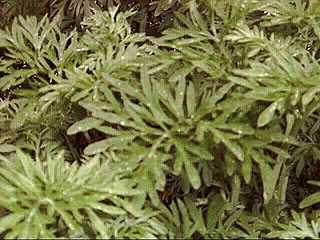
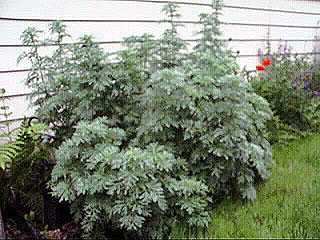
Synonyms : Wormwood; Common Wormwood
Definition : Artemisia Absinthium consists of the dried leaves and flowering tops of Artemisia absinthium L. (Fam. Compositae), a shrubby al herb growing in the United States and Canada. It is cultivated in N. Africa, Europe and the U.S.A. The flowering tops are collected during the late summer Artemisia Absinthium yields about 1% of volatile oil containing thujone (absinthol), thujyl alcohol and iso-valeric acid . It contains, in addition absinthin and a bitter glycoside.
 Jack recommends the following as very good ...
-
In one litre of undiluted clear spirit (95%) soak for twenty days (shaking once a day)
the following:
- 28 grams wormwood (artemisia absinthium)
- 28 grams aniseed
- 28 grams fennel
- 28 grams star anise
- 3.5grams coriander
- 4.5 grams mint
- 4.5 grams wormwood
- 4.5 grams licorice root (cut)
- 1.25 grams citrus peel
If you wish to have a traditionally colored drink, add to the litre or so of liquor the following:
-
Jacks Absinthe recipe will not only taste lousy,
but is potentially dangerous, because the maceration time he recommends
is 19 days too long. All vintage absinthe recipes indicate to macerate
the herbs in 85% alcohol for Less than 24 hours, and then distill. If
you macerate longer than this, you infuse the alcohol with too many of
the harmful properties of the wormwood, and not only will your drink
taste nauseatingly bitter, but it can also make you ill.
Also note that modern Pernod is not Absinthe without the wormwood. Pastis is a descendant from Absinthe (Pernod & Ricards way of dealing with the Absinthe ban of 1915), but is an entirely different drink with a different recipe made by different processes. Modern Pernod has more in common with Ouzo than Absinthe.
As a side note you can find some wonderful and safe Absinthe recipes at: http://www.feeverte.net/bedel/.
-
I combed the web for a few days compileing all that i had found with a few modifications we have produced a GREAT recipie!!!
- 750ml 90+% alc.
- 2oz wormwood
soak for aprox. 7-10 days
strain (dont worry about leaving a small amounts in) - 2 tbl ea anise & fennel
- 3-4t bl spearmint (light flavor but goes well)
- 1 tsp coriander
- 1/2 tsp caraway
- 1/4 tsp cardamon
- 1 tbl angelica root
- 1 tbl ea anise hyssop & hyssop
-
Take
add 750ml water and potstill for BEST results (i will not try it any other way
I used a 1 gallon stove top potstill
took a heads of 1/2 oz and then collected about 1000-1200ml
blended to 65% and added 1 drop of green food coloring for effect (i just havent steeped any woormwood for color yet)
-
Make you own absinthe,although the use of wormwood in spirits is
banned because of its thujone content, although some sources say the
quantity is slight and the danger is exaggerated. Similarly Zubrowka
or bison grass flavored vodka is modified for the U.S. market because
of it contains coumarin which is a blood thinner. I would have
thought that because of the high cholesterol diet of the average
American this would be useful! Bison grass or sweet grass (hierochloe
odorata) is readily available in the U.S. and makes a great flavored
vodka - watch that you don't bleed to death though!
See:http://absinth.com/links/history.html
Steven warns against using wormwood oil ...
-
According to
http://www.gumbopages.com/food/beverages/absinthe.html wormwood oil has
nothing to do with absinthe, and is POISONOUS ! There is much more on that
site, aswell as a story of some guy trying to get high by drinking a bottle
of wormwood esential oil :).
Instead, try SAFER means, such as perhaps even growing your own wormwood 'Artemisia absinthium' by buying seeds from http://www.thymegarden.com/, seeds/plants from http://www.peruvian-journey.com/wormwood.htm, or probably from many other places (just search for buying wormwood artemisia absinthium at google i guess)
Alcoholic Icy-Poles
These are iceblocks made using alcohol. A great adults only treat. Matt elaborates ...-
...the long and short of it is
I went in this morning, and he gave me a photocopy of the recipe
which they got from their supplier of icey pole moulds "Lickety Sips".
ADULTS ONY ICE BLOCKS
Makes 24 x 75ml of each, or 8 per flavour
SUGAR SYRUP:
6 cups castor sugar
7 cups of water
3 FLAVOURS for ICE BLOCKS:
1 cup orange juice
1/4 Cup vodka
1 cup lime juice (strained)
1/4 Cup gin
1 cup pink grapefruit juice
1/4 Cup Campari
To make the sugar syrup- bring water and sugar to the boil in a large saucepan, stirring until the sugar is dissolved. Simmer for about 5 minutes. Remove from heat, set aside and cool.
To make ice blocks: Divide the sugar syrup equally among 3 bowls. Stir the orange juice and vodka into the 1st bowl, the lime juice and gin into the 2nd bowl and the grapefruit juice and Campari into the 3rd bowl.
Cover the mixtures and refrigerate until cold. Then churn each mixture separately in an ice cream maker until just beginning to Firm. Spoon into Lickety Sips ice block moulds. Place the sipping lids on and freeze.
To unmould, dip BRIEFLY in warm water. Serve immediately.
KNOCKOUT PUNCH
Wal offers ...-
According to Websters Dictionary, Punch comes from the Hindi word for
5 - panch. Indians enjoyed a drink with 5 ingredients: arrack
(distilled palm sap wine), sugar, citrus, water, spices. The British
seized this basic formula and made their own variations. For recipes
see:
http://www.epicurious.com/d_drinking/d03_punch/punchintro.html
- 1 cup of cachaca
- 2 fresh limes (segmented, squeezed & bruised to release oils) (Lime juice and grated lime rind is another alternative)
- 2 tablespoons sugar
- 1 cup of crushed ice
- 1 lime
- 2oz cachaca (60ml)
- sugar to taste
- ice cubes
In Brazil they drink cachaca which is a (usually, although it can be aged in oak) white rum from sugar cane juice (not molasses). Home Distillers can make it from raw sugar, in a 2 or 3 stage reflux still or pot still. Brazilians drink Caipirinha(little peasant girl) which is made with cachaca and resembles the above punch. It is all the rage in Europe and the U.S. now.
Recipe:
A cocktail version: